Chatamari: The Ancient Newari Rice Pizza With a 1,500-Year History
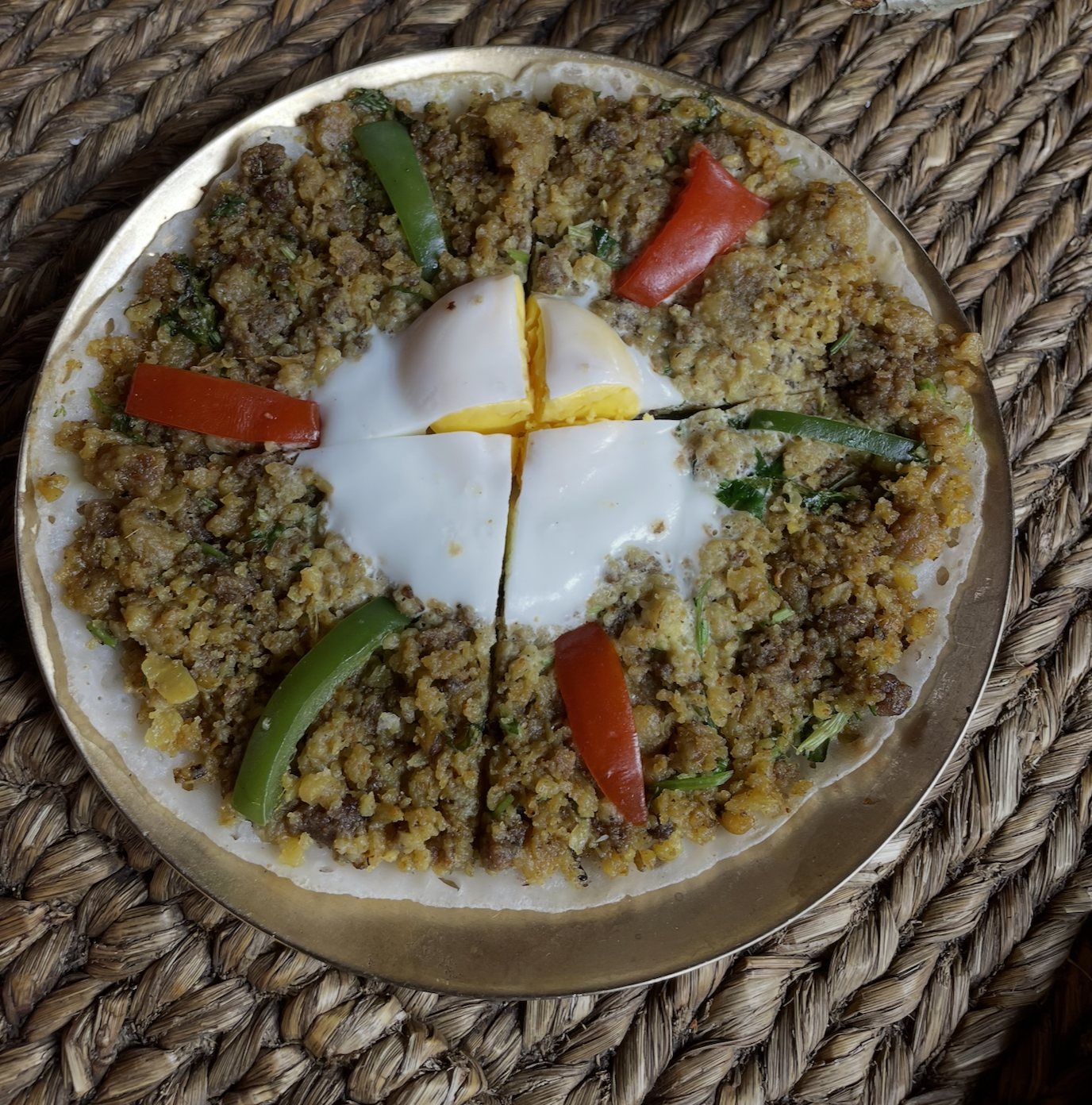
Every cuisine has a dish that tells you everything about where it came from. For the Newar people of Nepal's Kathmandu Valley, that dish is Chatamari — a thin, lacy rice flour crepe eaten for over a thousand years, offered to gods before it ever reached a dinner table, and now earning the nickname "Nepali pizza" from travellers who try it in Thamel.
That nickname is both apt and insufficient. Yes, it looks like a round flatbread with toppings. But Chatamari's history is tangled up with ancient rituals, sacred festivals, royal courts, and the survival of one of Asia's most distinctive indigenous food cultures. It deserves more than a pizza comparison.
Who Are the Newar, and Why Does It Matter?
Chatamari is not just a Nepali dish — it is specifically a Newari dish. The Newar are the indigenous inhabitants of the Kathmandu Valley, one of the oldest continuously inhabited urban civilisations in South Asia. Their food culture is distinct from broader Nepali cuisine and represents thousands of years of agricultural refinement, religious practice, and culinary tradition.
Newari cuisine is centred almost entirely on rice — rice flour, rice wine, puffed rice, fermented rice, dried rice — whereas much of hill Nepal depends more on lentils, millet, and corn. This rice-centrism is what makes Chatamari possible: a cuisine that has spent millennia developing every possible thing you can do with rice flour would inevitably produce something as elegant as a thin, crisp crepe.
The Origins: From Temple Offering to Dinner Table
The earliest documented references to Chatamari place it in the context of religious offerings during the Licchavi period (approximately 400–750 CE), when the Kathmandu Valley was a prosperous trading hub between Tibet and the Indian subcontinent. Scholars of Newari culture note that rice crepes closely resembling Chatamari appear in historical descriptions of food offerings made to deities at the valley's numerous temples.
The dish became more firmly established during the Malla dynasty (12th–18th century) — one of the great periods of Newari cultural flourishing. Under the Mallas, Kathmandu Valley was divided into three city-states: Kathmandu, Patan, and Bhaktapur. Each developed its own rich tradition of feasting, religious ceremony, and elaborate cuisine. Chatamari was part of the feast culture of all three cities.
Chatamari and Indra Jatra
If you want to understand Chatamari, you have to understand Indra Jatra — the most important festival in the Kathmandu Valley, celebrated for eight days each September. Indra Jatra honours Indra, the king of the gods, and is also the festival during which the living goddess Kumari appears publicly to bless the city.
Chatamari is one of the foods most closely associated with Indra Jatra. During the festival, families across the valley prepare elaborate spreads that always include Chatamari. The dish is offered first to deities — placed on the ritual plate before humans eat — and then shared among family and community.
This ritual dimension is important. Chatamari wasn't historically a casual snack. It carried the weight of devotion. The care taken in making it — the overnight soaking of rice, the careful fermentation, the precise heat of the pan — was inseparable from the act of offering. To make Chatamari well was a form of respect.
The Samay Baji: Chatamari's Ceremonial Home
Chatamari doesn't appear alone in traditional Newari culture. It's almost always part of the samay baji — a ceremonial feast spread that is the cornerstone of Newari ritual dining. A full samay baji includes:
- Chatamari — the rice crepe, the centrepiece
- Beaten rice (chiura) — the foundational starch
- Baji — puffed and roasted rice
- Roasted soybeans (bhatmas sadeko)
- Buff (water buffalo) meat — various preparations
- Achar — pickles and chutneys
- Aila — traditional Newari rice wine, home-distilled
- Eggs — boiled or used as topping on Chatamari
The samay baji is served at births, deaths, weddings, festivals, and religious ceremonies. It is the Newari language of hospitality written in food. Chatamari sits at the centre of that language.
What Makes a Chatamari?
The base is everything. Traditional Chatamari uses a fermented rice flour batter — rice soaked overnight, ground fine, mixed with water to a thin consistency, and left to ferment for several hours. This fermentation is what gives authentic Chatamari its characteristic slight tang and its distinctive lacy holes as it cooks on the pan.
The batter is poured onto a hot, lightly oiled flat pan — a tawa — in a thin layer, almost like a crêpe. Toppings are added immediately while the batter is still wet, then the pan is covered briefly so everything cooks together. The result is a thin, slightly crispy base with a soft centre, carrying whatever has been placed on top.
Traditional toppings
The Food Science: Why Fermented Rice Batter Works
Chatamari's defining characteristic — the thin, slightly sour base with lacy holes and crispy edges — is entirely a product of fermentation. This is not an accident. Newari cooks discovered through centuries of practice that allowing the rice batter to ferment overnight produces a dramatically better crepe. Modern food science explains exactly why.
When ground rice batter sits at room temperature, naturally occurring Lactobacillus bacteria (the same genus responsible for yoghurt and Gundruk) begin converting the available sugars into lactic acid and carbon dioxide. This process does three things that matter for the final texture:
- CO₂ bubbles form throughout the batter, creating the lacy holes and light texture when the crepe cooks — similar to how sourdough bread gets its open crumb.
- Lactic acid begins to partially break down the starch granules in the rice flour, giving the cooked crepe its characteristic chew without heaviness.
- pH drops to around 4.0–4.5, which inhibits pathogenic bacteria (food safety) and creates the subtle tang that distinguishes authentic Chatamari from plain rice flour crepes.
Chatamari Nutrition: What You're Actually Eating
A plain Chatamari base is a relatively clean, low-fat food — the nutritional profile shifts significantly based on toppings. Here's what the numbers look like for a standard egg + minced chicken Chatamari (one piece, approximately 150g total):
Chatamari (1 piece, egg + chicken topping)
Estimates based on USDA FoodData Central data for rice flour, egg, and lean minced chicken. Figures will vary with oil quantity and topping amounts. About our methodology →
One of the most interesting nutritional aspects of Chatamari is its lower glycaemic index relative to plain cooked rice. Fermentation partially hydrolyses the rice starch — breaking some long starch chains into shorter fragments — which slows digestion and blunts the glucose spike. This is the same principle behind sourdough bread having a lower GI than regular bread.
The egg topping makes Chatamari a surprisingly complete meal component: the high-quality complete protein of the egg combined with the carbohydrate base gives a balanced macronutrient profile that keeps blood sugar stable for longer than rice alone would.
How to Make Chatamari at Home (Australia-Friendly)
Chatamari — serves 4 (makes 6–8 crepes)
Chatamari vs. Dosa: Not the Same Thing
If you've had South Indian dosa, Chatamari will seem familiar. Both are thin fermented rice crepes cooked on a hot iron pan. But they diverged thousands of years ago and took completely different paths.
Dosa uses a batter of fermented rice and lentils (urad dal). Chatamari uses pure rice flour — no lentils. Dosa is served folded or rolled, usually with sambar and coconut chutney. Chatamari is served flat, topped like a pizza, with achar. Dosa is largely a breakfast food. Chatamari is a ritual feast food that happens to work for any meal.
The similarities speak to a shared rice-farming culture across South and Southeast Asia. The differences speak to the unique isolation of Kathmandu Valley — a civilisation that developed its own genius in its own way.
Chatamari Today: Street Food and Diaspora
Walk through Thamel in Kathmandu today and you'll find Chatamari on almost every Newari restaurant menu. It's been embraced as a street food, a tourist food, a quick lunch. The tourist-facing version often comes with processed cheese on top — an adaptation that would make a traditional Newar cook wince, but which reflects the dish's flexibility.
In the Nepali diaspora — particularly in Australia, the UK, and the US — Chatamari is one of the dishes people recreate when they're missing home. It's not as famous as momo, not as universal as dal bhat, but for Nepalis with Newari roots, it carries something irreplaceable: the specific memory of festival food, of samay baji spreads, of the smell of a rice crepe cooking on a hot tawa in someone's grandmother's kitchen.
Making Chatamari abroad is an act of cultural memory. The ingredients are simple. The technique is learnable. The connection it creates to a thousand years of Newari civilisation is not something a restaurant can replicate for you.
Ask NepaliFoodGPT about other Newari dishes — Yomari, Bara, Kwati, Aila, Samay Baji — and the full ceremonial context of Newari cuisine. Or ask for a full step-by-step Chatamari recipe with toppings customised for what you can find in Australia.
Make Chatamari with AI Guidance
Ask NepaliFoodGPT for a full Chatamari recipe customised to your ingredients, dietary needs, or what you can find at your local supermarket.
🫓 Ask NepaliFoodGPTRead Next
 Sirnex Tech