Dal Bhat Calories: What's Actually in Nepal's National Dish
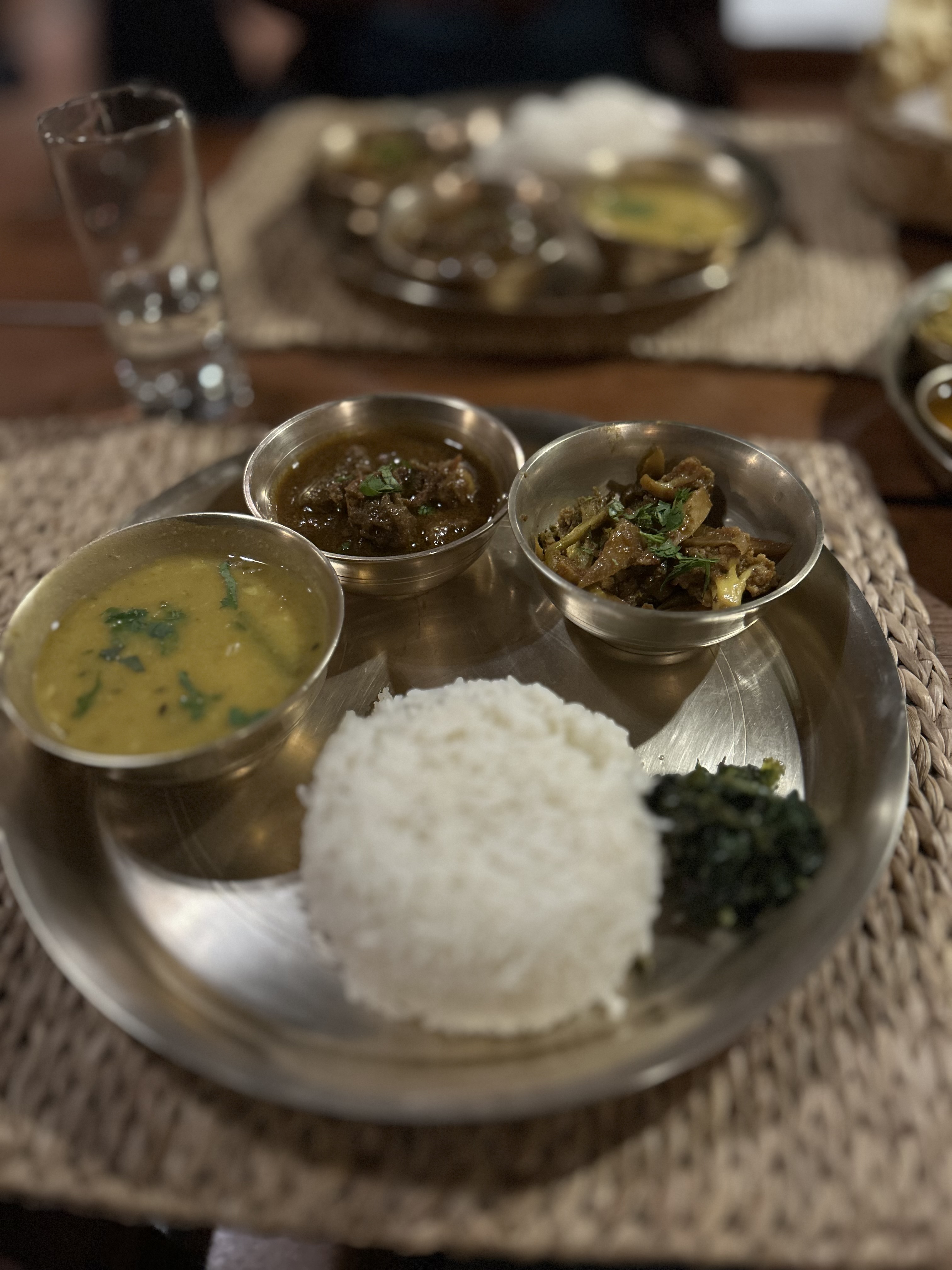
There's a reason Nepali trekkers, farmers, and porters live on Dal Bhat. The famous saying — "Dal Bhat power, 24 hour" — isn't just cultural pride. It's a claim about sustained energy, and it turns out, the food science backs it up.
But if you're tracking macros, managing your diet, or simply curious about what's in the meal you've eaten a thousand times — finding a reliable nutrition breakdown for Dal Bhat has always been frustrating. Western nutrition databases either don't include it or get the numbers wrong.
Here's the full picture, based on a standard full-plate Dal Bhat (approximately 600g serving): steamed rice, yellow lentil dal, and a basic vegetable tarkari.
Dal Bhat Nutrition Facts (Standard Serving)
Dal Bhat · 1 full meal · ~600g
Figures calculated using food science principles from USDA FoodData Central and EFSA databases, adjusted for cooking method, ingredient ratios, and a standard Nepali serving. About our methodology →
Why Dal Bhat Keeps You Full for Hours
The secret is in the combination. Lentils (dal) are rich in complex carbohydrates and soluble fibre, which slow glucose absorption and flatten the blood sugar spike you'd get from rice alone. This is why Dal Bhat has a medium glycaemic load despite being a carbohydrate-heavy meal — the lentil fibre acts as a natural brake on glucose release.
The protein content is also higher than most people expect. A full plate of Dal Bhat delivers around 27g of protein — comparable to a chicken breast. This comes primarily from the lentils, which are among the most protein-dense legumes available.
Dal Bhat for Fitness and Macro Tracking
Dal Bhat is genuinely good for fitness goals — but the numbers shift significantly based on how it's prepared:
More ghee = more fat and calories. A tablespoon of ghee adds approximately 120 kcal and 14g of fat. Festival-style Dal Bhat with generous ghee can easily reach 800–900 kcal.
Rice portion size matters most. The rice component accounts for roughly 60% of the total calories. Reduce the rice and add an extra scoop of dal to increase the protein-to-calorie ratio.
Adding egg or chicken to the tarkari boosts protein to 35–40g per meal — making it an excellent post-workout meal.
How Does It Compare?
To put the numbers in context:
A Big Mac contains 550 kcal with 25g protein and 30g fat. A standard Dal Bhat gives you 648 kcal with 27g protein and only 14g fat — more protein, less saturated fat, more fibre, and a significantly better micronutrient profile.
For Nepalis living abroad who are used to tracking calories in apps like MyFitnessPal, Dal Bhat is almost never listed accurately. The entries that exist typically use Indian dal fry as a proxy, which underestimates the protein content of yellow lentil dal and ignores the vegetable tarkari entirely.
The Bottom Line
Dal Bhat is nutritionally excellent — a genuinely balanced meal with a strong protein-to-calorie ratio, meaningful fibre, solid iron content, and a medium glycaemic load. The reputation for sustained energy is earned. It's not just comfort food; it's one of the more intelligently composed traditional diets in the world.
The only caveat: ghee portions and rice volume make a big difference to the final numbers. A light Dal Bhat can be 480 kcal. A generous festival plate can be 900 kcal. Know your version.
NepaliFoodGPT's Nutrition Analyser breaks down any Nepali dish using Food Science AI — including combo meals. Get calories, full macros, glycaemic load, allergens, and bioavailability notes. Free with a sign-up.
Analyse Your Nepali Dish
Type any Nepali dish and get a full food science nutrition breakdown in seconds. Free to try.
🔬 Try the Nutrition AnalyserRead Next
 Sirnex Tech