10 Essential Nepali Spices — And Where to Buy Them in Australia
Timur, jimbu, tejpat, hing — the spices that make Nepali food taste like Nepali food. A practical guide with Australian stockists, substitutes, and what each one actually does.
One of the hardest parts of cooking Nepali food outside Nepal isn't the recipes — it's the spices. You know the dish should taste a certain way. You know something is missing. But you're not always sure what, or where to find it.
This guide covers the 10 spices that define Nepali cooking, what each one actually tastes like, which dishes use it, and — most importantly — where to buy each one in Australia and what to use if you can't find it.
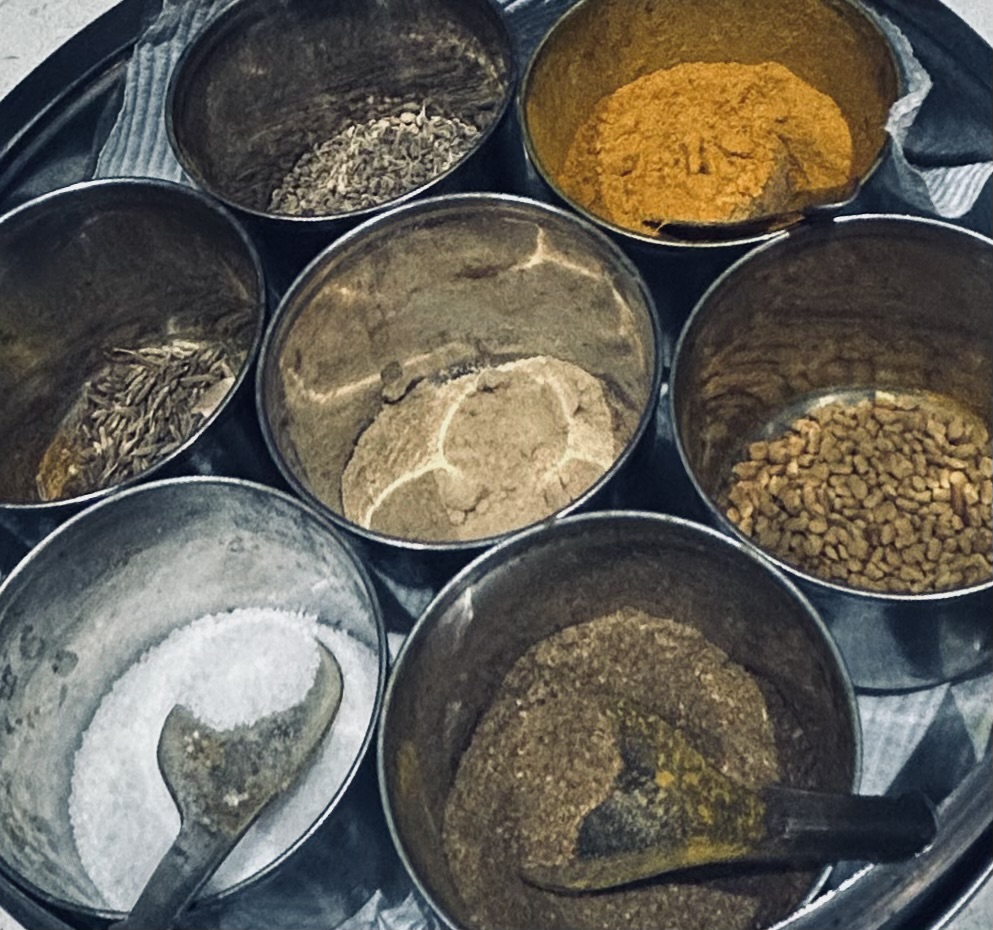
Quick Reference
| Spice | Nepali Name | In Australia | Substitute? |
|---|---|---|---|
| Timur | टिमुर | Medium | Sichuan pepper |
| Jimbu | जिम्बु | Hard | Dried chives |
| Tejpat | तेजपात | Medium | Bay leaf (partial) |
| Hing | हिंग | Medium | Garlic + onion powder |
| Jwano | ज्वानो | Medium | Dried thyme |
| Kalo Jeera | कालो जीरा | Medium | Black cumin / nigella |
| Methi | मेथी | Easy | — |
| Dhania | धनिया | Easy | — |
| Dalle Khursani | डल्ले खुर्सानी | Hard | Habanero / Scotch bonnet |
| Lapsi | लप्सी | Hard | Tamarind + raw mango |
Timur is Nepal's own version of Sichuan pepper — but not exactly the same. It's citrusy, slightly floral, and causes a mild numbing tingle on the tongue. It's the defining spice in Sekuwa, momo achar, and many Newari dishes. Without it, these dishes lose their characteristic bite.
Jimbu is the spice most people struggle to find outside Nepal. It looks like a tangle of dried wild chives and has a distinctive grassy, mildly onion-like fragrance that releases only when fried in hot ghee or oil. It's foundational in Nepali dal and soups — that smoky herbal note you can never quite replicate is jimbu.
Tejpat is often confused with Western bay leaves, but they're different plants with different flavours. Tejpat has three veins (Western bay has one), a subtle cinnamon-clove note, and a more complex aroma. It's used whole in tempering oil at the start of curries and rice dishes — it's not meant to be eaten.
Hing smells alarming straight from the jar — pungent, almost sulphurous. But the second it hits hot oil, it transforms into a deep savoury umami note that somehow tastes of garlic and onion simultaneously. A tiny pinch is all you need. Brahmin and Buddhist Nepali cooking that avoids onion and garlic relies on hing as a replacement.
Jwano (also called ajwain) smells powerfully of thyme — intense, medicinal, slightly bitter. Nepali cooking uses it in small amounts in flatbreads, some meat dishes, and traditional digestive remedies. It's believed to aid digestion, which is why it often appears alongside heavy or oily dishes. Use sparingly — it dominates quickly.
Not sure how much of a spice to use, or how to combine them? Ask NepaliFoodGPT — it'll give you quantities for your specific dish and serving size.
Ask NepaliFoodGPT free →Kalo jeera means "black cumin" and it's often confused with nigella seeds (kalonji), which look similar but taste different. True black cumin is sweeter, more complex, and nuttier than regular cumin. It's used in Nepali rice dishes and some curries — it gives biryani a distinctive depth that regular cumin can't quite replicate.
Methi comes in three forms Nepali cooking uses: whole seeds (bitter, used in tempering), dried leaves (kasuri methi — earthy and herbal), and fresh leaves (mild, used as a vegetable). The seeds turn deeply bitter if overcooked, so they're always added at the very start of oil tempering and used in small quantities. Kasuri methi added at the end of a dish gives it an unmistakable restaurant quality.
Coriander — both the seeds and the fresh herb — is the backbone of Nepali cooking. The seeds are toasted and ground into virtually every masala mix. The fresh leaves finish almost every savoury dish. The key Nepali technique: dry-roast whole seeds in a pan until fragrant, then grind. Pre-ground coriander from a jar is a distant second.
Dalle khursani is a small round chilli that sits around 100,000–350,000 Scoville — brutally hot, but with a fruity depth that sets it apart from raw heat. It's used fresh in achar, pickles, and chutneys. The red-ripe version is dried and used as a whole dried chilli in curries. Nothing else quite replicates its fruity heat.
Lapsi is technically a fruit, but it functions as a souring and flavouring agent the way a spice does in Nepali cooking. The dried pulp or powder adds a complex sweet-sour-tart flavour to achar, chutneys, and sweets. It's irreplaceable in traditional lapsi ko achar — sweet, tangy, spiced pickle. Outside Nepal, it's essentially unavailable.
Building Your Nepali Spice Pantry in Australia
You don't need all 10 to start cooking well. Here's how to build up over time:
Week 1 — Buy at Woolworths or Coles: Cumin seeds, coriander seeds, turmeric powder, fenugreek seeds, red chilli powder, mustard seeds, black pepper. These form the base of 80% of Nepali cooking and are easily available.
Month 1 — Visit an Indian grocery: Tejpat (Indian bay leaf), hing (asafoetida), kasuri methi (dried fenugreek leaves), jwano (ajwain/carom seeds), kalo jeera (black cumin). Most cities with any South Asian community have an Indian grocery. Sydney, Melbourne, Brisbane, Perth, and Adelaide all have multiple options.
Ongoing — Source specialty items: Timur and jimbu are the hard ones. Order online (search Amazon AU, eBay, or Nepali community Facebook groups), find a Nepali grocery if there's one in your city, or ask someone travelling from Nepal to bring some.
Not sure which spice goes in which dish, or how much to use? Ask NepaliFoodGPT — it knows every Nepali recipe and can tell you exactly what spices to add and when.
Ask NepaliFoodGPT free — in English or Nepali →Read Next
 Sirnex Tech